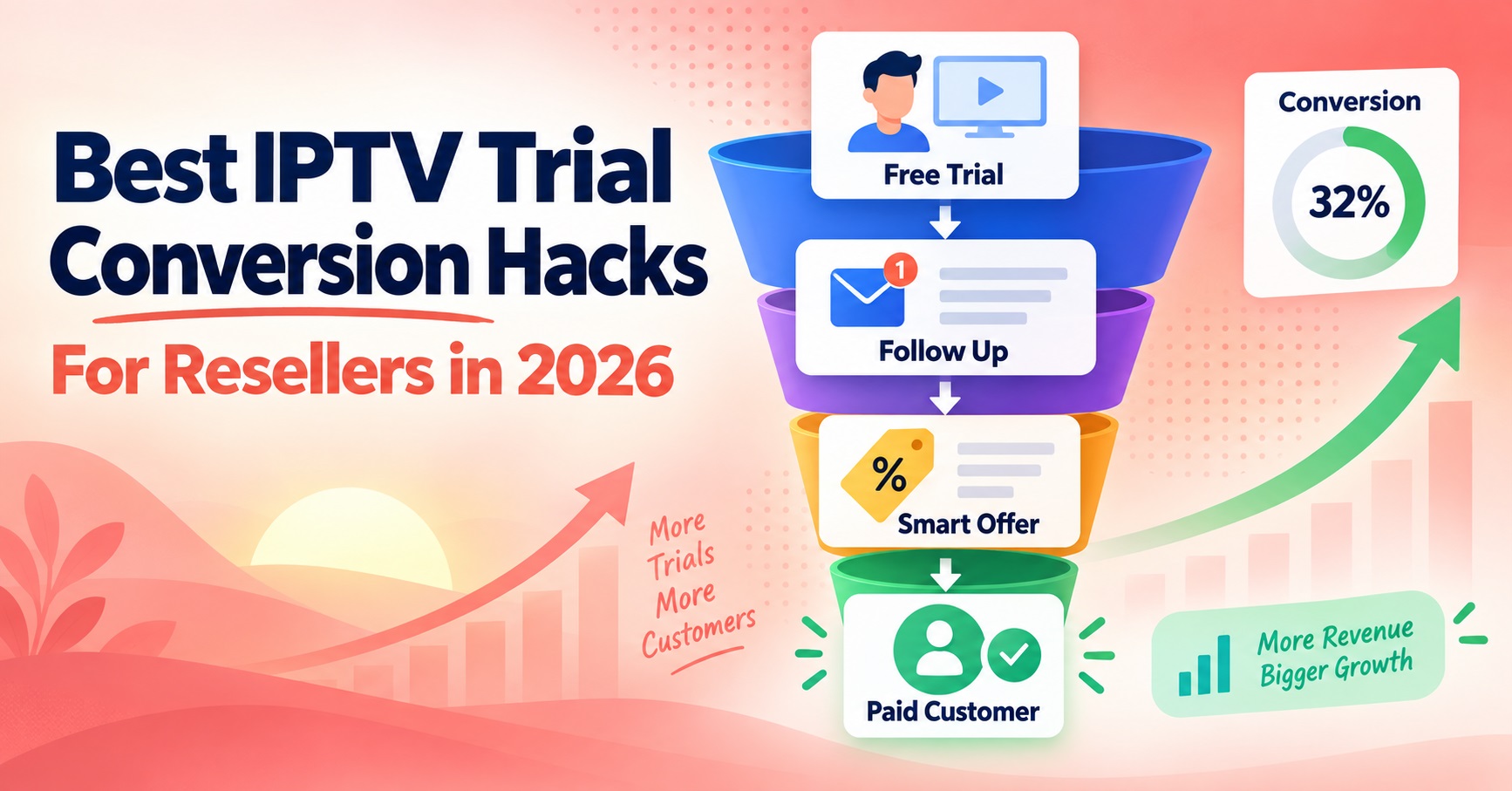

IPTV trial conversion is decided in the first hour after someone opens a test account, not during the sales conversation that got them there. Most IPTV Panel resellers assume a weak conversion rate means their pricing is off or a competitor is stronger, when the real cause is usually a slow signup, a confusing app setup, or a trial that quietly expires with no follow-up message. Fix those three points and an average offer will convert noticeably better than a strong offer left to run on autopilot.
Where Trial Requests Actually Get Lost
Most trial drop-off happens in three places, and none of them are the offer itself. The first is signup delay. A customer asks for a trial, and the reseller sends login details an hour or a day later, by which point interest has already faded. The second is the app setup itself. A customer receives a username and password with no instructions for the specific device they own, tries a couple of things, gives up, and never mentions it again. The third, and the most common, is silence after the trial ends. No message, no check-in, nothing. The trial simply expires and the reseller assumes disinterest.
None of these problems require a better product. They require a tighter process around the one that already exists.
Setting Up a Trial That Doesn’t Waste Credits or Confidence
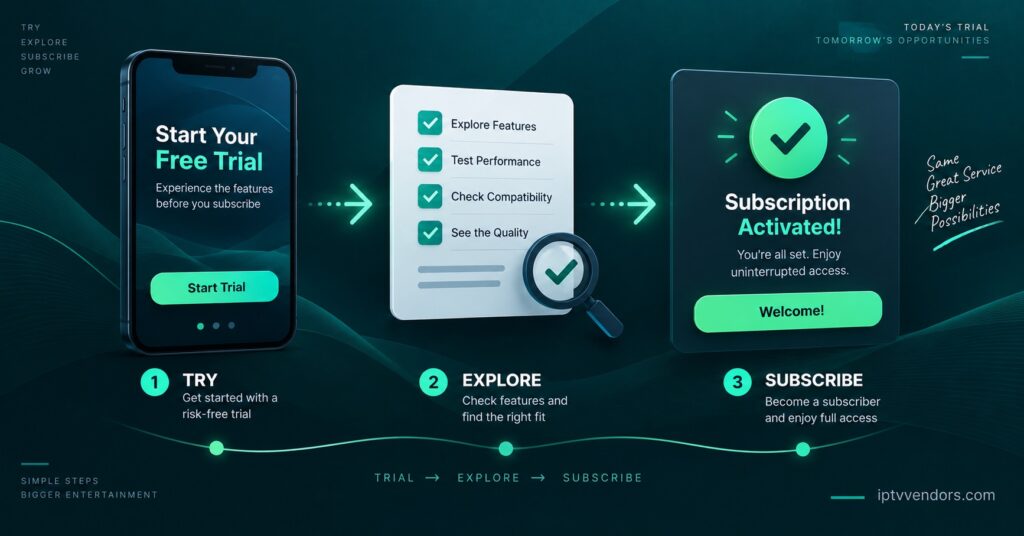
Most panels let you create short-duration trial accounts that expire automatically without consuming a full paid credit, and it’s worth confirming exactly how your own panel handles setting up short-duration trial accounts before you start offering demos at scale. New resellers sometimes skip this step and burn full credits on every demo, which quietly erodes margin on customers who were never going to convert.
Before sending any trial, match the setup to the customer’s device rather than sending generic instructions. A customer with a smart TV app needs different steps from someone using a set-top box, and a mismatched guide is often the reason a trial account never gets used at all. If you already know the device, send exact steps for that device. If you don’t know it, ask before you activate the account rather than after the customer has given up.
Pro tip: Ask for the device model before activating a trial, not after. It takes ten seconds and prevents most first-day drop-off.
The First Hour Decides Most of Your IPTV Trial Conversion
Once the account is live, the first login matters more than anything that follows. Send the app link, username, and password together, in one message, immediately after activation. Delayed or split information is one of the fastest ways to lose someone who was genuinely interested a moment earlier.
It also helps to set expectations before the customer notices a problem themselves. Live streaming carries a small amount of natural delay compared with a traditional broadcast, and setting realistic latency expectations in your welcome message stops a normal few seconds of lag being read as a fault with the service. A short line explaining that streams may run slightly behind live broadcast prevents a disproportionate number of early complaints.
Where possible, check that the stream actually loads correctly on your side before assuming the customer’s setup is fine. A channel list that hasn’t refreshed, or a server region that’s slower for that customer’s location, will sink a trial before the person has formed any opinion about pricing.
Following Up Without Sounding Like a Salesperson
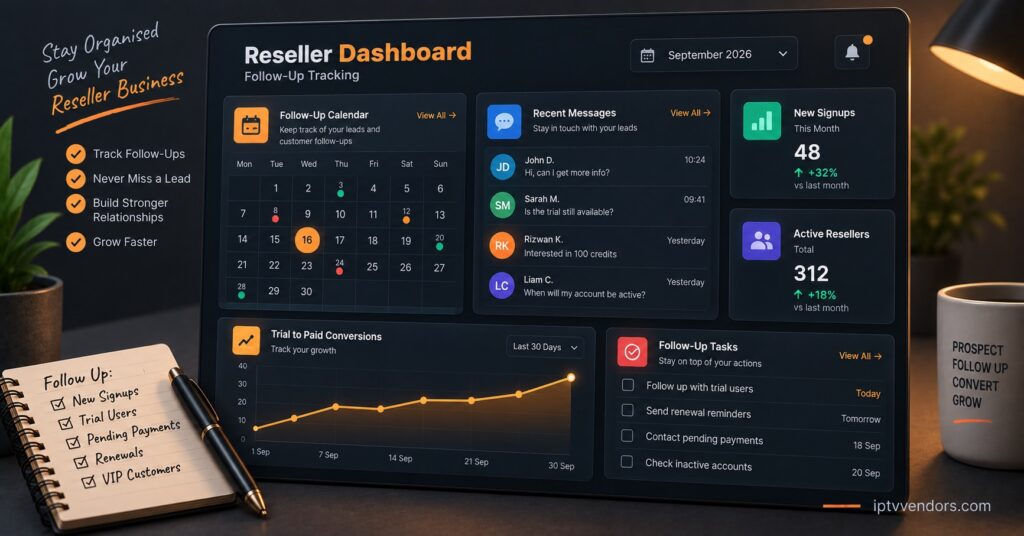
A trial with no follow-up is a trial that mostly converts by accident. Inconsistent follow-up after trials is one of the most common reasons IPTV panel resellers lose customers who were actually interested, because a customer who sets nothing up for a few days is not necessarily uninterested, they may simply be busy.
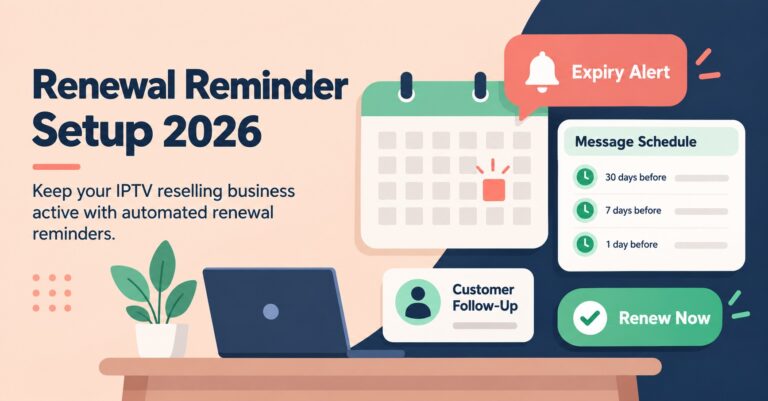
A short check-in on day one, asking whether the app installed correctly, does more than any discount. A second message roughly midway through the trial, mentioning something specific the customer asked about, such as a particular channel group or device, reads as genuine attention rather than a script. The final message, sent before the trial expires rather than after, should give the customer a clear and simple way to continue, not a generic “did you enjoy the trial” line.
Customers who go quiet after every message are a different case from customers who respond but delay. Chasing the first group indefinitely wastes time that’s better spent on new trial requests.
Framing Pricing at the Moment They’re Ready to Buy
By the time someone reaches the point of paying, the decision usually isn’t about whether the service works, it’s about which plan feels sensible. Presenting a single monthly price in isolation makes IPTV feel like a one-off purchase to test rather than an ongoing service worth committing to. Showing quarterly and annual plan structures alongside the monthly option gives the customer a frame of reference, and a quarterly plan positioned as the middle option tends to feel like the sensible choice rather than either extreme.
A multi-device add-on is worth mentioning at this stage too, particularly for households. It rarely changes someone’s decision to buy, but it often increases what they’re willing to pay once they’ve already decided yes.
Pro tip: Never present pricing as your first message after a trial ends. Confirm the trial went smoothly first, then move to plans in the same conversation.
Trial Behaviour and What It Usually Means
| Trial behaviour | Likely reason | What to do |
|---|---|---|
| Requests a trial but never logs in | App wasn’t installed correctly, or link was unclear | Resend simple step-by-step instructions the same day |
| Logs in once then goes silent | Buffering, missing channels, or a poor first impression | Check the stream yourself before the next follow-up message |
| Asks detailed technical questions near expiry | Genuinely interested but unsure about device compatibility | Confirm compatibility directly rather than assuming |
| Never replies to any follow-up | Wrong audience fit, or comparing several providers at once | Send one final message, then move on |
Common Mistakes That Quietly Kill Conversion
Offering unusually long trials feels generous, but it often backfires. The longer a trial runs, the more the account starts to feel free rather than temporary, and urgency to decide disappears. A shorter, well-supported trial with a clear end point tends to convert better than a generous one left to drift.
Sending trials to anyone who asks, without a short conversation first, is another common one. A brief question about what the customer currently uses and why they’re looking elsewhere filters out people who were never serious and protects your panel from unnecessary load during busy periods.
Pro tip: Keep a simple list of every trial issued, with the date sent and the date it expires. A one-line spreadsheet is enough to stop leads disappearing between messages.
If You Manage Sub-Resellers
If sub-resellers are running trials under your panel, the same principles apply one level down, and their conversion habits reflect on your service even when the customer never deals with you directly. A sub-reseller who issues trials carelessly, without device checks or follow-up, creates support tickets and complaints that eventually land back at your dashboard. Sharing a short trial checklist with anyone reselling under you is a quick way to keep standards consistent across the whole chain.
Frequently Asked Questions
How long should an IPTV trial last?
Short trials, typically a few hours to a couple of days, tend to create more urgency than week-long trials. The exact length matters less than making sure the customer actually uses the account during that window.
Should you take payment details before starting a trial?
Some IPTV panel resellers prefer this to filter out casual requests, while others find it reduces the number of people willing to try the service at all. Either approach can work; consistency in how you apply it matters more than which one you choose.
When is the best time to follow up after a trial ends?
Before it expires, not after. A message sent while the trial is still active gives the customer a reason to act, while a message sent once access has already stopped feels like it’s chasing a lost sale.
Does the customer’s device affect trial conversion?
Yes, significantly. A trial that fails to install correctly on the customer’s specific device is often mistaken for a IPTV reseller panel service problem, even though it’s purely a setup issue.
How many free trials should one customer get?
One is usually enough. Repeated trials for the same person tend to attract people who have no intention of ever paying, and it costs you time better spent on new prospects.
Can too many trial requests overload a panel?
Yes, particularly during peak periods such as major sporting fixtures, when trial volume spikes alongside genuine paying customer traffic. Qualifying leads before activating a trial helps keep that volume manageable.
IPTV trial conversion rarely comes down to the offer itself. It comes down to how quickly the account is set up, how clearly the first login is explained, whether anyone follows up before the trial quietly expires, and how sensibly pricing is presented once the customer is ready to decide. Tighten those four points before changing anything about your pricing or your marketing, and the conversion rate on trials you’re already generating will move before you spend anything on new traffic.
Trial Follow-Up Checklist
- Confirm the customer’s device before activating the trial
- Send login details and app instructions together, in one message
- Set expectations about normal streaming delay in the welcome message
- Check the stream loads correctly before the customer’s first login
- Send a day-one check-in asking if the app installed correctly
- Send a mid-trial message referencing something specific the customer mentioned
- Follow up before the trial expires, not after
- Present plan options in order, from monthly through to annual, rather than one price alone
- Log every trial issued with its start and expiry date