
Broadchurch Streaming Guide on IPTV: How It Actually Works
If you typed “Broadchurch Streaming Guide on IPTV” into Google, here is the straight answer first. Broadchurch is a British crime drama that you can watch through official, licensed platforms, and any IPTV setup that streams it must do so through proper rights, not pirated feeds. This guide explains how IPTV delivery works behind the scenes, where you can legitimately watch a show like this, and what resellers need to understand before they ever promote content. The goal here is clarity, not a shortcut to anything dodgy. By the end you will know exactly how the pipes work, what is legal, and what to avoid.
[ez-toc]
There is an important honesty point upfront. A lot of people search for a Broadchurch Streaming Guide on IPTV hoping to find a way to watch copyrighted series for free. That is not what this is. Distributing a licensed drama without the rights is illegal in the UK and most other places, full stop. What we can do is explain the technology, point you toward legal viewing, and help anyone building a reseller business understand the operational side. If you run a panel, your job is infrastructure, and the content responsibility sits with whoever holds the licence. Keep that line clear and you stay on the right side of everything.
What a Broadchurch Streaming Guide on IPTV Really Means
Let me explain it like you just asked me over coffee. IPTV stands for Internet Protocol Television, which is a fancy way of saying telly delivered over your internet connection instead of an aerial or a satellite dish. A Broadchurch Streaming Guide on IPTV, in plain terms, is just an explainer of how a show could travel from a server to your screen using that internet method. The show itself is not special to IPTV. What changes is the delivery road it takes. Understanding that road is the whole point, because once you see how data moves, you understand why licensing and server quality matter so much.
The confusion usually comes from people mixing up the technology with the legality. IPTV is a neutral pipe. Water can flow through a pipe whether it is clean or dirty, and IPTV is the same. The pipe does not care what content runs through it. That is exactly why a proper Broadchurch Streaming Guide on IPTV has to separate the two ideas. The method of delivery is legal and widely used by major broadcasters. The question of whether a specific stream is allowed depends entirely on rights. If you remember nothing else, remember that the technology is fine and the source is what you must check.
Pro Tip: When you read any streaming guide, ask one question first. Is this pointing me to a licensed source or an unlicensed one? That single question saves you from legal trouble and dodgy quality both.
How IPTV Delivery Works Behind the Scenes
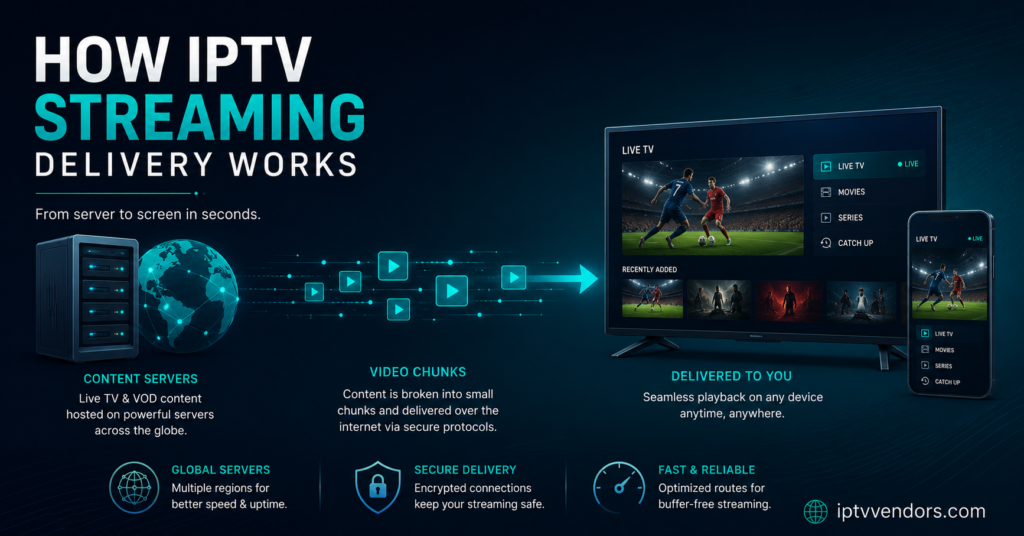
Here is the part most guides skip, and it is the most useful bit. When you watch something over IPTV, the video is not arriving as one giant file. It is chopped into thousands of tiny chunks, each a few seconds long, and sent to your device one after another. Your player stitches them back together so fast that it looks seamless. This chunking is why you can start watching almost instantly instead of waiting for a whole episode to download. It is also why a weak connection causes that annoying buffering wheel, because a chunk got delayed in traffic.
The server location plays a massive role in how smooth this feels. A stream coming from a server near you arrives with less delay, which the techies call lower latency. A stream travelling halfway around the world has further to go, so it can stutter even on a fast connection. This is exactly why serious infrastructure providers spread servers across regions. If you are exploring the operational side, a solid starting point is understanding the IPTV reseller panel that controls how those connections get distributed and managed.
The other moving part is bandwidth management. During peak evening hours, loads of people stream at once, and a good network balances that traffic so nobody gets a degraded picture. Cheap setups fall over at exactly the moment everyone wants to watch. Quality setups plan for the rush. This is the unglamorous engineering that separates a stable service from a frustrating one, and it has nothing to do with the show being streamed.
Where to Legally Watch a Show Like Broadchurch
This is the section that actually helps you watch the drama tonight without breaking any rules. A British crime series like this is typically available through official on-demand platforms and licensed broadcaster catch-up services in the regions where the rights have been sold. The honest answer is that availability shifts by country and by year, because licensing deals expire and renew. So the right move in 2026 is to check the official broadcaster apps and recognised streaming subscriptions for your region rather than hunting for a back-door feed.
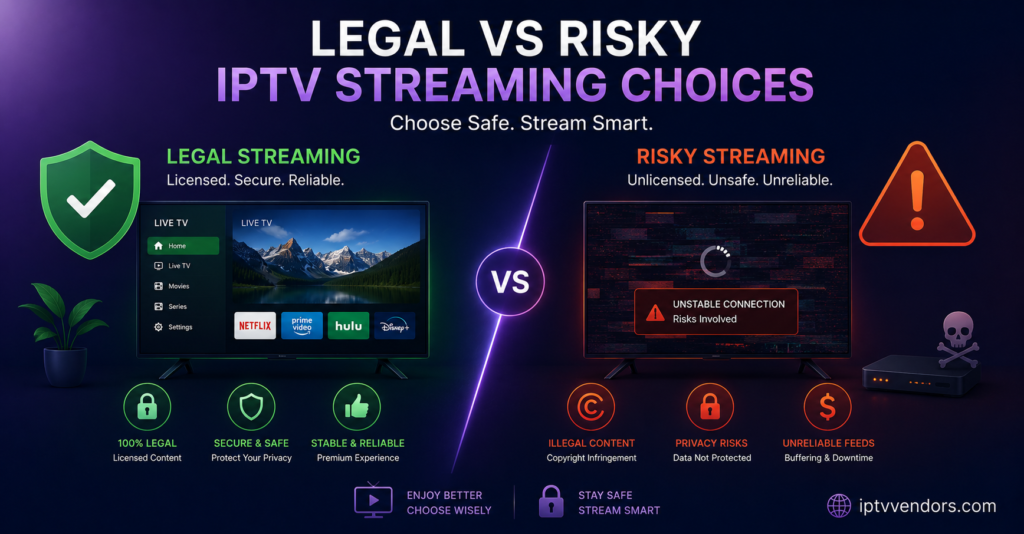
A genuine Broadchurch Streaming Guide on IPTV should always point you here first. Legal platforms give you a clean, high-quality picture, no legal risk, and no malware lurking in some random app. The trade-off is that you pay a subscription, but you get reliability and support in return. If a deal sounds too good, like full premium catalogues for almost nothing, that is the classic warning sign of an unlicensed operation. Real licensed content costs real money to deliver, and anyone offering it for pennies is cutting a corner that will eventually cut you.
Here is a simple comparison to keep things straight.
| Source Type | What You Get | Risk Level |
|---|---|---|
| Licensed platform | Stable HD stream, support, legal | None |
| Unverified cheap feed | Buffering, sudden cut-offs, illegal | High |
| Free unknown app | Malware risk, no reliability | Very High |
The pattern is obvious once it is laid out. Legitimate sources win on every measure that matters except headline price, and the price gap usually reflects the legal corner being cut.
The Reseller Side of a Broadchurch Streaming Guide on IPTV
Now let me switch hats and talk to anyone building a business, because this is where a Broadchurch Streaming Guide on IPTV gets practical. If you run an IPTV reseller operation, you are selling access to infrastructure and a managed dashboard, not promising any specific copyrighted show. That distinction is your legal shield and your reputation both. Your customers are buying a stable platform with good servers, and the responsibility for content rights sits with whoever supplies and licenses the actual streams. Build your messaging around the technology and the service quality, never around named premium series.
This is not just legal caution, it is good business. Resellers who promise the world on specific shows attract customers who leave the moment a stream goes down, and they expose themselves to takedowns. Resellers who sell reliability, clear pricing, and real support build something that lasts. If you are setting up or scaling, getting your credit system and dashboard right matters more than any single piece of content. Many operators start by learning how to manage an IPTV panel properly before they take on a single paying customer, and that order of operations pays off.
One illustrative example of a reseller-focused storefront approach is britishseller.co.uk, which positions itself around panel infrastructure and reseller tooling rather than headline content claims. It is mentioned here as one example among many in the space, not as an endorsement, just to show the operational framing that keeps a business clean. The lesson to take is the framing itself. Sell the engine, not a promise about what plays on the screen.
Pro Tip: Write your sales page so it would still make sense if every show name vanished. If your pitch collapses without naming copyrighted titles, your pitch is built on the wrong foundation.
Why Server Quality Matters More Than the Show
People obsess over content and ignore the thing that actually ruins their evening, which is poor server performance. You can have access to anything you like, but if the server is overloaded or far away, your viewing experience is misery. This is the quiet truth that a good Broadchurch Streaming Guide on IPTV has to spell out. The smoothness you feel watching anything comes down to uptime, server location, and how well traffic is balanced during busy periods. Content is the easy part. Delivery is the hard part.
Uptime is the percentage of time a service is actually running without crashing. A service with high uptime rarely leaves you staring at an error screen. Server location, as covered earlier, decides how far your data travels and therefore how quickly it arrives. And traffic balancing decides whether the service holds up when half the country is watching at nine in the evening. These three factors together decide whether you enjoy your subscription or curse it. If you are choosing a provider or building one, weigh these far above any content claims.
For anyone comparing options or troubleshooting a wobbly setup, it helps to talk to people who handle this daily. Reaching out to a reseller support team that understands server distribution will tell you more about real quality than any flashy channel list ever could. The list is marketing. The infrastructure is the product.
Common Myths in a Broadchurch Streaming Guide on IPTV
Let me clear up the nonsense that floats around, because a useful Broadchurch Streaming Guide on IPTV should pop a few myths. The first myth is that IPTV is automatically illegal. It is not. Major legitimate broadcasters use IPTV technology every single day. The technology is neutral. Only an unlicensed source is the problem, never the delivery method itself. People who conflate the two end up either scared of legal services or careless about illegal ones, and both reactions miss the point entirely.
The second myth is that more channels means a better service. In reality, a bloated list of thousands of feeds usually signals a setup that is grabbing whatever it can without proper licensing, and those feeds are the first to die. A smaller, stable, properly sourced offering beats a giant unstable one every time. The third myth is that price reflects quality in a simple way. Sometimes a cheap legal service is great and an expensive shady one is rubbish. What you are really paying for is reliable infrastructure and legitimate rights, not the size of a menu.
Here is a quick myth-versus-reality table to lock it in.
| Common Myth | The Reality |
|---|---|
| IPTV is always illegal | The tech is legal, only the source decides |
| More channels is better | Stable, licensed feeds beat bloated lists |
| Cheapest is best value | Reliability and legal rights are the real value |
Once you internalise these three corrections, you read every streaming guide with sharper eyes and waste far less money.
Honest Talk About the Legal Grey Area
I promised honesty, so here it is without sugar-coating. There is a genuine grey area in the IPTV world, and pretending otherwise would be insulting your intelligence. Some services operate in a murky middle ground where the rights are unclear or simply absent, and they market themselves as legitimate. A responsible Broadchurch Streaming Guide on IPTV names this openly. The safest path is always a clearly licensed platform. The riskiest path is a cheap service making big content promises with no transparency about where its streams come from.
For resellers, the grey area is where reputations go to die. If you build on unlicensed feeds, you are one complaint away from losing your business and possibly facing legal action. If you build on legitimate infrastructure and stay honest about content responsibility, you sleep at night. The choice is not really close when you think long term. Plenty of operators have learned this the hard way after a provider vanished overnight with their customers’ money. Choose the boring, legal, stable route and you protect everything you are building.
The bottom line for viewers is just as simple. If you cannot verify that a source is licensed, treat it as a risk to your wallet, your devices, and your legal standing. The few quid you save is rarely worth the trouble that follows.
Conclusion
So there is your honest Broadchurch Streaming Guide on IPTV, and hopefully it cleared the fog rather than adding to it. The technology of IPTV is legal, widely used, and genuinely clever in how it chops video into chunks and delivers them over the internet. The thing to watch is never the method, it is the source. For watching a series like Broadchurch in 2026, the right move is to use official, licensed platforms in your region, because they give you quality, safety, and peace of mind. For resellers, the winning play is selling stable infrastructure and honest service rather than promises about specific copyrighted shows. Keep the technology and the licensing clearly separated, choose legitimate sources every time, and you get the best of streaming without the headaches that sink so many people. That clarity, more than any channel list, is what this guide was really about.
Surprise Section: Three Quick Checklists
Subscriber Checklist (for everyday viewers)
- Confirm the platform is officially licensed before you pay anything.
- Check that the service is available legally in your own region for 2026.
- Test your internet speed so streaming runs smoothly without buffering.
- Be suspicious of any deal offering huge premium catalogues for almost nothing.
- Keep your apps updated and avoid installing unknown players from random links.
Reseller Checklist (for business operators)
- Build your sales pitch around infrastructure and reliability, never named copyrighted shows.
- Confirm your upstream supplier handles content licensing responsibly.
- Choose region-optimised servers so your customers get low latency.
- Set up a clear credit system and a clean dashboard before taking customers.
- Offer real human support, because retention beats constant new-customer hunting.
Sub-Reseller Checklist (for those reselling under a reseller)
- Understand exactly what your parent reseller is and is not responsible for.
- Get clarity on server quality before you commit, since you inherit their stability.
- Keep your own marketing clean and avoid promising specific premium content.
- Track your active and expired customers so nothing slips through the cracks.
- Build a direct support line with your parent reseller for fast problem solving.