
The first time you log into an IPTV panel, it can feel like a lot of information at once. Credit balance, active connections, expiry countdowns, device logs. Give it a week. That same screen becomes the fastest way to check the health of your entire business in thirty seconds.
Understanding your panel properly is what separates resellers who stay stuck at 30 customers from those who scale to 300. Not because the software is complicated, but because most people never go beyond the basics.
What an IPTV Panel Actually Does
The panel is the management interface between you and your customer base. It does not stream content or host channels. It manages access credentials, tracks subscription status, and processes credit transactions. That distinction is worth being clear on from the start.
As a UK IPTV reseller, every administrative task you have runs through this software. Creating accounts, handling renewals, locking devices, resetting passwords, all of it happens inside the panel without any coding or server management on your part. The platform abstracts the technical complexity so you can focus on the customer-facing side of the business.
What surprises most new operators is how much information the dashboard surfaces automatically. You don’t need to dig for problems. Active connection counts, low credit warnings, and expiring accounts all appear on the main screen the moment you log in.
How an IPTV Panel Works in Practice
The panel manages a live database of customer permissions. When you create a new account, the system records the customer’s credentials, links them to a subscription package, and deducts the appropriate credits from your balance. That all happens in the same action.
When the customer opens their streaming app, the app sends an authentication request to the control system. The system checks whether the account is active and whether the device matches the one registered at setup. If both checks pass, the connection is approved in under a second. If either check fails, the connection is blocked and the reason appears in your logs.
Any change you make in the panel applies immediately. A password reset, a device update, a plan extension, all of it takes effect in real time. That responsiveness is what makes it possible to resolve most customer complaints within a few minutes of them contacting you.
Managing Credits and Packages Effectively
The IPTV credit system is the financial core of your operation. You purchase credits wholesale, then spend them activating and renewing customer subscriptions. One credit typically covers one month of service for one user, though package lengths affect how credits are calculated per plan.
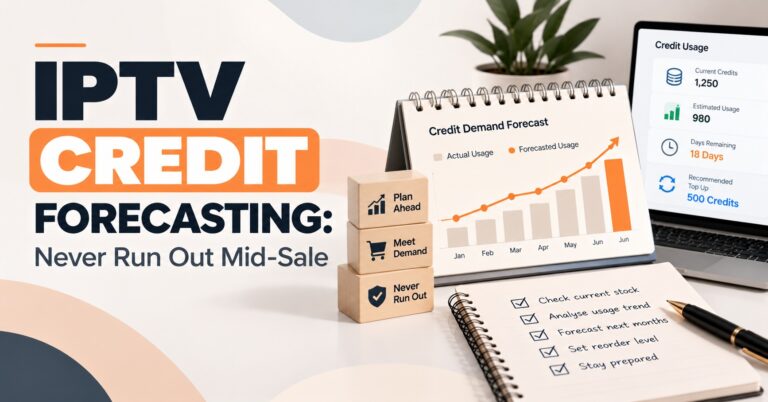
Check your credit balance every morning before you do anything else. Early on, letting the balance run low during a busy period and not being able to activate three new orders on the same afternoon is a real scenario. That gap can cost you customers permanently. A simple daily habit prevents it entirely.
Most panels let you set low-balance alerts. Use them. Also think carefully about your package structure. Offering one-month, three-month, and twelve-month options gives customers flexibility while the longer plans improve your cash flow predictability significantly.
Device Locking and User Authentication Controls
Device locking ties each subscription to a specific MAC address identifier registered when the account is activated. Once locked, any connection attempt from an unregistered device is automatically blocked. Apply device locking to every account by default and explain the policy clearly to customers at signup.
Without device locking, one account can be shared freely across multiple households. That erodes your revenue and puts pressure on network stability for everyone. The few minutes it takes to register a device at activation saves far more time in disputes and refund requests later.
The device setup guide you provide customers matters here too. Customers who set up correctly the first time rarely contact you with problems. Those who guess their way through setup tend to accidentally change device settings and then report that their service has stopped working. A clear written guide removes most of that friction.
Sub-Reseller Management and Scaling Your Panel
Once your direct customer base reaches a manageable size, the next growth step for most operators is building a sub-reseller network. The panel allows you to create separate login accounts for sub-resellers, allocate credits to them at a wholesale rate, and monitor their activity from your main dashboard.
Sub-resellers manage their own customers independently, but they draw from the credit balance you assign. You move volume without handling individual customer sales. The margin comes from the difference between what you pay for credits and what you charge sub-resellers.
The IPTV reseller panel plans you choose will determine whether sub-reseller functionality is available. Not all panels include it at the entry level. If you plan to scale this way, check for that feature before you commit to a platform.
Common Mistakes to Avoid With Your IPTV Panel
Ignoring the connection logs is the most common oversight. Logs show you failed connections, device mismatches, and unusual login patterns. Resellers who check logs daily catch problems before customers notice them. Resellers who only open the logs when a customer complains are always one step behind.
Weak passwords remain a persistent problem. Your panel holds your credit balance and your entire customer list. A compromised account can drain your credits and expose customer data overnight. Use a strong unique password, enable two-factor authentication if your platform supports it, and never share your login credentials.
Slow support response is the third issue. The panel gives you everything you need to diagnose and fix most problems in under five minutes. If you’re sitting on that diagnostic capability but replying to customers twelve hours later, you’re wasting the tool’s biggest practical advantage.
What to Look for When Choosing an IPTV Panel
Here’s how basic and advanced panels actually differ on the features that affect your daily operations:
| Feature | Basic Panel | Advanced Panel |
|---|---|---|
| User Account Creation | Manual | Semi-automated |
| Real-Time Connection Logs | No | Yes |
| Device ID Locking | No | Yes |
| Sub-Reseller Support | No | Yes |
| Credit Expiry Alerts | Basic | Real-time |
| Sales Analytics | Basic | Detailed |
Real-time logs and expiry alerts are the two features that affect daily operations most directly. Without them, you’re managing reactively. With them, you can run a proactive operation that catches most problems before they reach the customer.
Look at the IPTV reseller dashboard tutorial your provider offers before you sign up. A platform with poor documentation or no onboarding support will slow you down significantly in your first month. The learning curve is short when the tools are well explained. It’s much longer when you’re working things out by trial and error.
Author Note: Written from direct experience running IPTV panel operations across UK and European markets.
Frequently Asked Questions
What is an IPTV panel and what does it actually do?
An IPTV panel is a web-based management dashboard that lets you create and manage customer subscriptions without any technical infrastructure of your own. You log in through a browser, and from one screen you can create accounts, process renewals, monitor active connections, and track your credit balance. The panel connects to a live database that handles authentication and access control automatically. It does not stream content or host channels. It manages the permission layer that controls who can connect. Everything you do as a reseller operationally runs through this interface.
How does the credit system work inside the panel?
Credits are the internal currency of your IPTV reseller account. You buy them in bulk from your provider at a wholesale rate and spend them each time you activate or renew a customer subscription. The panel deducts the correct number of credits automatically based on the plan you select for each account. One credit typically equals one month of service for one user, though longer plans often calculate at a slightly different rate. Keeping your balance above a comfortable threshold is one of the most important daily habits in this business.
Why is device locking important and how do I set it up?
Device locking prevents a single subscription from being shared across multiple users. When you activate an account, you register the customer’s device using its MAC address or device ID. The panel then blocks any connection from a device that does not match that registration. To set it up, simply enter the device identifier when creating the account. Most panels make this a standard field in the account creation form. If a customer later changes their device, you update the registration in their account settings and the new device is authorised immediately.
Can I manage hundreds of customers through the same panel?
Yes. The platform is designed to scale from ten accounts to tens of thousands without any change in how you operate it. The interface remains the same, the credit system works identically, and the logs function the same way regardless of volume. The main operational challenge at higher volumes is support response time, not platform capacity. Many operators address this by building a sub-reseller network so that individual customer management is distributed rather than centralised.
How do I use the panel to keep customers renewing each month?
The most effective retention tool inside the panel is the expiry alert system. Set it to notify you several days before each account expires and contact those customers proactively before the service lapses. Customers who receive a renewal reminder rarely churn. Customers whose service simply stops without warning often don’t come back. Beyond alerts, check your connection logs weekly for accounts that have not connected recently. These are customers who may have quietly stopped using the service and are unlikely to renew unless you reach out. A short message asking if everything is working costs nothing and recovers more renewals than any other tactic.
Contact for customer support on WhatsApp
Open your panel right now and find the expiry list for the next ten days. Every customer on that list is a retention opportunity. Contact them today before the service lapses and you’ll see the difference in your renewal rate by the end of the month.