
If you are researching how an IPTV reseller panel UK works before committing to a provider, you are already ahead of most people who start in this business. The majority sign up, buy credits, and then spend their first two weeks figuring out basic operations by trial and error. This guide covers what the panel actually does, how the credit system works in practice, and what separates a well-run reseller operation from one that struggles.
What an IPTV Reseller Panel UK Means for Your Business
The panel is your management dashboard. It sits between you and the streaming infrastructure, translating complex technical processes into a simple interface you can operate from a browser. You do not need to understand how video packets are encoded or how server routing works. What you need to understand is the credit system, the account management tools, and the logs.
As a reseller, your role is entirely on the business side. You find customers, create their accounts, handle renewals, and resolve issues. The panel handles the technical execution of all of that. Think of it the way a shop owner thinks about a point-of-sale system you are not building the payment network, you are operating the interface that connects to it.
For anyone looking at IPTV reseller panel plans, the most important thing to understand upfront is that the panel is your entire operational infrastructure. Choosing the right one matters more than most new resellers realize.
How an IPTV Reseller Panel UK Works in Practice
When you first log in, you see a dashboard with your current credit balance, a list of active accounts, and expiry dates. Credits are the currency of the system. You buy them in bulk from your provider, and each time you create a subscription for a customer, the panel deducts the corresponding number of credits from your balance automatically.
The account creation process takes about thirty seconds. You enter the customer’s details, select the plan length, and the panel generates a unique login credential for that customer. Their device then authenticates against the database when they open their streaming app the whole process happens in under a second on the customer’s end.
Real-time updates mean that any change you make is live immediately. If you reset a password, extend a subscription, or suspend an account, the effect is instant. This is what makes the panel useful for customer service most issues can be resolved without any back-and-forth once you know where to look. The IPTV dashboard tutorial is worth working through before your first customer contacts you with a problem.
Credit Management the Part That Catches New Resellers Out
The credit system is straightforward in principle and surprisingly easy to mismanage in practice. Each plan length costs a set number of credits. A one-month subscription costs fewer credits than a twelve-month one, but the per-month credit cost is lower on longer plans. Understanding this pricing structure is how you build a margin that makes sense.
Here is a comparison of what different panel tiers typically offer:
| Feature | Basic Panel | Advanced Panel |
|---|---|---|
| User Management | Yes | Yes |
| Credit Balance Alerts | No | Yes |
| Detailed Analytics | Limited | Full |
| API Access | No | Yes |
| Automated Renewal | No | Yes |
| Custom Branding | Limited | Full |
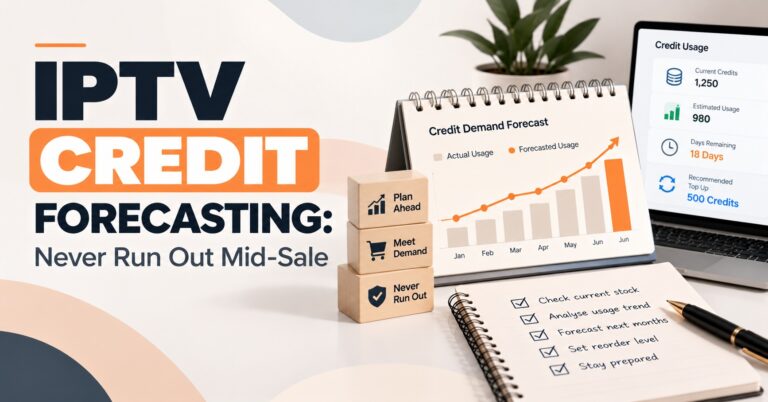
I learned early on that not watching your credit balance actively is the fastest way to create customer service problems. During a busy renewal weekend, I ran lower than expected because three long-term customers all renewed in the same forty-eight hours. No alert, no warning just a dashboard showing a balance I had not checked since Tuesday. After that I set a minimum balance threshold and checked it every morning. The IPTV credit system explained page covers how to calculate the right buffer for your customer volume.
Account Management and Customer Support Through the Panel
Every customer service situation starts with pulling up the account in your dashboard. The panel shows you the account status, the last connection time, the device being used, and whether there are any simultaneous connection conflicts. That information resolves the majority of complaints without needing to escalate anything.
The most common customer complaint in the first week after sign-up is a device setup issue. The customer has the correct credentials but cannot get their app to connect. In most cases, the account is perfectly active the problem is on the device configuration side. This is why knowing how to set up IPTV on different devices before your customers ask is more valuable than any sales skill.
Firestick and Android TV app sideloading documentation is something I keep bookmarked because Android-based device setup questions account for the highest share of support contacts I receive in any given week. Having a reliable reference saves time for both you and the customer.
Common Mistakes to Avoid When Running a Reseller Panel
The most expensive mistake is buying too many credits before building a customer base. Credits are not perishable in most panels, but the cash tied up in an oversized credit balance is cash that could be spent on marketing or customer acquisition. Start with enough to cover your first few weeks, then top up based on actual demand.
Ignoring account sharing is the second most costly error. Your panel logs will show it clearly one account connecting from multiple IP addresses across different locations simultaneously. If you have no policy in place, customers will share freely and your revenue per user drops. Device ID locking addresses this directly, and it is worth enabling as a default for all retail accounts.
The third mistake is treating the panel as something to check only when a problem arises. The resellers who run tight operations check their dashboards every morning. They see expiring accounts before the customer does, send renewal reminders proactively, and catch unusual login activity before it becomes a breach. Five minutes a day in the panel prevents most of the situations that turn into hour-long problems.
What to Look for When Choosing an IPTV Reseller Panel UK
Prioritize these features before anything else: full login history, credit balance alerts, device ID locking, and real-time connection logs. These are not advanced features they are the baseline tools for running even a small operation responsibly.
Beyond features, test the provider’s support response time before you commit significant credit spend. Send a test query and measure how long a useful reply takes. If the answer takes more than a few hours, that delay will cost you during an active customer problem. Also ask specifically how credits are handled in the event of a technical fault on the provider’s side. A clear answer to that question tells you a great deal about how the provider operates.
Sub-reseller functionality matters if you plan to scale beyond retail. If your panel does not support sub-accounts with their own credit allocation and dashboard access, you will hit a ceiling quickly. Check sub-reseller panel options before signing up if wholesale is part of your long-term plan retrofitting that later is more disruptive than planning for it from the start.
Author Note: Written from direct experience running IPTV reseller panel UK operations across UK and European markets.
Frequently Asked Questions
What is the difference between a basic panel and an advanced reseller dashboard?
A basic panel gives you the core tools account creation, credit deduction, and subscription tracking. An advanced dashboard adds credit alerts, full connection logs, automated renewal notifications, API access, and sub-reseller management. For a small starting operation, a basic panel works fine. Once you have more than twenty or thirty active customers, the absence of automated tools starts to create manual work that takes time away from growing the business.
How many credits should I buy when I start?
Enough to activate ten to fifteen accounts is a sensible starting point. This gives you room to test the system, create a few trial accounts on your own devices, and verify that your process works end-to-end before taking your first paying customer. Buying a large credit block before you have confirmed demand ties up cash unnecessarily. Top up in smaller amounts until your monthly volume is predictable enough to justify bulk purchasing at a discount.
Can I manage multiple customers across different countries from one panel?
Yes. The panel is browser-based and location-independent. Your customers can be anywhere, and you can manage their accounts from anywhere with an internet connection. The main practical consideration for international customers is support availability customers in different time zones expect responses during their evenings and weekends, which may not align with your working hours. Setting clear response time expectations upfront reduces frustration on both sides.
What happens when a customer says their account stopped working suddenly?
Open the account in your dashboard and check three things in order: the expiry date, the last successful connection time, and whether there is a simultaneous login conflict. Most sudden access failures are either an expired subscription, a password that was changed accidentally, or a device ID conflict caused by the customer switching to a new device. All three are fixable in under two minutes from the panel. If none of those explain the issue, check whether other customers are reporting similar problems, which would point to an infrastructure issue on the provider’s side.
Is it possible to automate renewals so customers do not need to contact me each month?
Advanced panels support automated renewal notifications the system messages the customer before their account expires. Full automatic billing integration, where payment triggers an automatic account renewal with no manual input, requires API connectivity between the panel and a payment processor. This is available on higher-tier panel plans and is worth setting up once your customer base reaches a size where manual renewal management becomes a bottleneck. Until then, a personal renewal message three days before expiry works well and also maintains the customer relationship.
Iptv Reseller customer support on WhatsApp
Log into your panel today and check how many accounts expire in the next ten days. For each one, send a renewal message now rather than waiting. That single habit proactive renewals is the most direct action you can take this week to protect your recurring income.