A stable IPTV reseller panel is not something you notice when it is working — you only notice it when it is not. The moment buffering complaints start arriving from multiple customers on the same evening, you understand exactly how directly platform stability connects to your retention rate. Choosing the right infrastructure from the start saves you from having to rebuild trust with customers you should never have lost.
What a Stable IPTV Reseller Panel Means for Your Business
Stability operates across three layers: the physical server infrastructure, the software management layer, and the synchronization between them. A weakness in any one layer produces customer-facing problems even when the other two are functioning correctly.
For resellers, the practical meaning of stability is simple. Customers stream without interruption, accounts authenticate quickly, and changes you make in the panel apply immediately. When all three of those things happen consistently, your support workload stays low and your renewal rate stays high.
I have operated on both stable and unstable platforms, and the difference in daily experience is significant. On an unstable platform, a noticeable portion of your time goes on reactive support — customers reporting issues, you diagnosing them, escalating to the provider, waiting for resolution. On a stable platform, most support tickets resolve themselves before they become customer contacts.
How a Stable IPTV Reseller Panel Works in Practice
Authentication is the most frequent interaction between the platform and your customers. Every time a customer opens their streaming app, the app sends a request to the control system, which checks the database and approves or blocks the connection. On a well-built platform, this takes under a second. On an overloaded one, the delay is enough for customers to assume the service is down.
Real-time synchronization determines how quickly your actions in the panel affect the customer experience. Extending a subscription, resetting a password, updating a device registration — each of these should apply instantly. When I log into a panel and make a change, I expect the customer to see that change in their app within seconds. Any longer than that, and support calls drag on unnecessarily.
Load balancing distributes connection traffic across multiple servers automatically. During high-traffic periods — a major sporting event, a weekend evening — simultaneous connections can spike dramatically. A platform with proper load balancing absorbs those peaks without visible impact. A platform without it shows the spike directly to your customers as buffering or failed connections.
Server Infrastructure and CDN Across Your Customer Base
The physical infrastructure determines the ceiling of what any software layer can achieve. Enterprise-grade servers in multiple data centres, with automatic failover between them, provide a fundamentally different baseline than shared hosting or single-location infrastructure. When a server in one location experiences an issue, failover routes traffic to another location automatically — typically within seconds and without any action required from you.
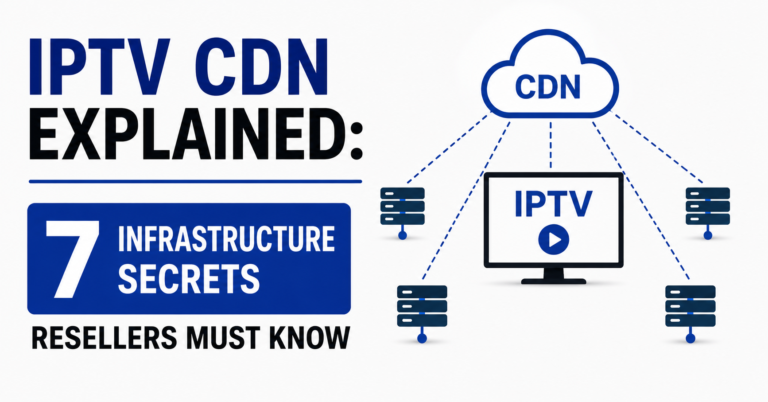
A content delivery network distributes streams from the server node geographically closest to each viewer. A customer in Manchester connects to a different node than a customer in Madrid. Both get lower latency and faster loading than they would from a single centralised server. If one node becomes temporarily unavailable, traffic reroutes to the next nearest node without interruption.
The practical test for CDN effectiveness is peak-hour streaming quality. Stable platforms maintain consistent performance between 8pm and 11pm on weeknights, when streaming demand is highest. If you are evaluating a new provider, access a test account specifically during those hours. A platform that performs well at 2pm on a Tuesday but struggles on a Friday evening has infrastructure problems it is not telling you about.
Dashboard Performance and Account Management
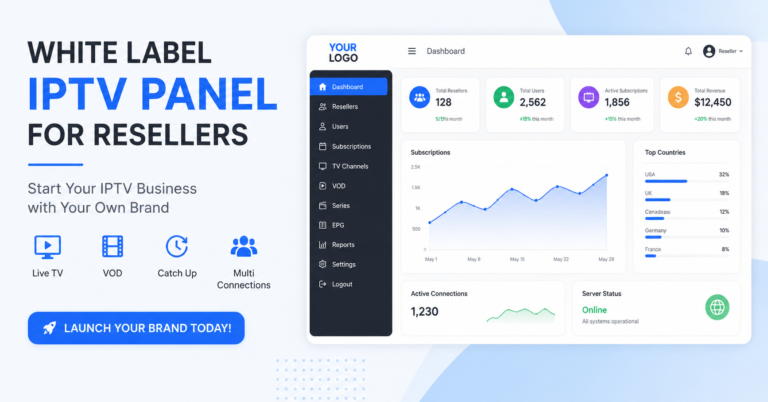
The IPTV reseller dashboard is where you spend most of your working time. A panel that loads slowly, times out under load, or displays inconsistent data adds friction to every administrative task. At ten customers, slow panel performance is annoying. At two hundred customers, it becomes a genuine operational bottleneck.
When you first log into a stable panel, the main screen loads in under two seconds and shows your credit balance, active connection count, and upcoming expirations without needing to navigate anywhere. That immediate visibility is not cosmetic — it is the difference between catching a problem proactively and finding out about it from a customer message.
Connection logs are the diagnostic tool you will use most. A stable platform maintains complete, real-time logs showing every authentication attempt, every device that connected, and every error that occurred. When a customer reports that their service stopped working at 9:30pm last Tuesday, you should be able to open their account and see exactly what happened at that time. Incomplete or delayed logs make every support conversation longer and less conclusive.
Security Layers That Protect Platform Stability
Security failures are a direct cause of platform instability. Unauthorised access to accounts drains your credits, disrupts service for legitimate customers, and damages your reputation. A stable platform addresses security at multiple levels rather than relying on a single control.
Strong login authentication, including support for two-factor access, protects your panel credentials. IP-based access controls limit which locations can authenticate to your account. Anti-abuse monitoring detects unusual patterns — mass login attempts, credential stuffing, abnormal connection volumes — and blocks them before they affect your operation. The IPTV reseller panel plans you choose should specify which security features are included at each level.
Encrypted data communication between the customer’s app and the authentication server protects account credentials in transit. Without encryption, credentials can be intercepted and reused. This is a baseline expectation for any platform you operate, not an optional extra.
Common Mistakes to Avoid When Evaluating Platform Stability
Testing only during off-peak hours is the most common evaluation mistake. A platform can appear perfectly stable at 10am on a weekday and fall apart at 9pm on a Saturday. Always test during the hours when your customers actually watch, which means evenings and weekends. A few days of observation during peak hours tells you more than weeks of off-peak monitoring.
Trusting marketing claims about uptime without verification is the second mistake. “99% uptime” is easy to state and difficult to disprove without evidence. Ask providers for their uptime history with specific data, not a percentage claim. Some providers publish status pages with historical incident records — those are far more informative than a stated figure.
Underestimating the support response quality is the third mistake. When infrastructure problems do occur, your experience of them depends largely on how quickly your provider responds and resolves the issue. Before committing to a platform, send a non-urgent technical question and measure the response time. A provider who takes eighteen hours to answer a test query will take at least that long when you have a real outage affecting customers.
What to Look for When Choosing a Stable IPTV Reseller Panel
| Feature | Basic Panel | Stable Advanced Panel |
|---|---|---|
| Server Redundancy | No | Yes |
| Automatic Failover | No | Yes |
| Multi-Region CDN | No | Yes |
| Real-Time Connection Logs | Limited | Complete |
| Load Balancing | No | Yes |
| Low Credit Alerts | No | Yes |
Look for documented uptime records, not just guarantees. Ask about the failover process specifically — how long does it take, is it automatic, does it require any manual action on your side. Verify that the device setup guide for the platform covers the streaming apps your customers use most. A well-documented platform generally indicates a well-maintained one.
Check whether the platform sends proactive notifications when infrastructure issues occur. The best providers alert resellers at the moment an incident begins, not after customers have already started complaining. That difference in communication quality is a strong indicator of how the provider manages its infrastructure overall. Also confirm what the IPTV credit system behaviour is during an outage — specifically whether credits continue to be consumed during periods when the service is unavailable.
Author Note: Written from direct experience running IPTV reseller panel operations across UK and European markets.
Frequently Asked Questions
How do I test whether a panel is genuinely stable before committing?
Request test access and use it actively for at least five to seven days, not just a few minutes. Log in during peak evening hours and check dashboard load speed, log completeness, and authentication response times. Create a test customer account and verify it from an actual streaming device to measure the real-world experience your customers will have. Ask the provider directly what their failover process is and how long it takes. Providers with solid infrastructure give specific answers. Providers with inadequate infrastructure tend to give vague reassurances.
What is the connection between server stability and my renewal rate?
When customers experience consistent, uninterrupted streaming, they renew without prompting because the service is meeting their expectation. When customers experience regular buffering or outages, they contact you, lose confidence, and often do not renew even if the issue is eventually resolved. The relationship is direct and measurable. Operators who switch from unstable to stable platforms typically see renewal rates improve within the first two renewal cycles, simply because fewer customers have experienced service disruptions in the period before renewal.
Does CDN support matter if all my customers are in one country?
Yes, even within a single country. A CDN with multiple regional nodes distributes traffic across them, which provides load redundancy even for a geographically concentrated customer base. If all your customers connect through a single server and that server has a spike in demand or a momentary issue, every customer is affected simultaneously. With multiple nodes covering the same territory, a problem on one node affects only a portion of your customers while the rest continue unaffected. The redundancy benefit exists at any scale.
How do I know if buffering complaints are a platform problem or a customer problem?
Open the customer’s account in your panel and check the connection logs at the time the buffering occurred. If the logs show successful authentication and a stable connection, the issue is most likely on the customer’s side — internet speed, router position, or device performance. If the logs show repeated authentication failures, dropped connections, or error codes, the issue is at the platform level. If multiple customers report buffering at the same time and their logs all show similar errors, that is a clear infrastructure signal to escalate to your provider with the specific timestamps and error codes from the logs.
What uptime level should I expect from a professional IPTV reseller panel?
A professionally managed platform should achieve 99% or higher uptime over any rolling thirty-day period, which translates to no more than about seven hours of total downtime per month. The more important metric, however, is the frequency and duration of individual incidents rather than the aggregate figure. Two short incidents of fifteen minutes each are far less disruptive than one incident of six hours. Ask providers not just for their headline uptime percentage but for their average incident duration and maximum incident duration over the past twelve months. Those numbers tell you more about the actual customer experience than any single percentage.
Iptv Reseller customer support on WhatsApp
Access your current panel today during evening peak hours and time how long the dashboard takes to load. If it takes more than three seconds, that is the first conversation to have with your provider — because your customers’ authentication requests are going through the same infrastructure.